Call Us: 888-488-5750

What does a PBM do? Use this handy guide to explain

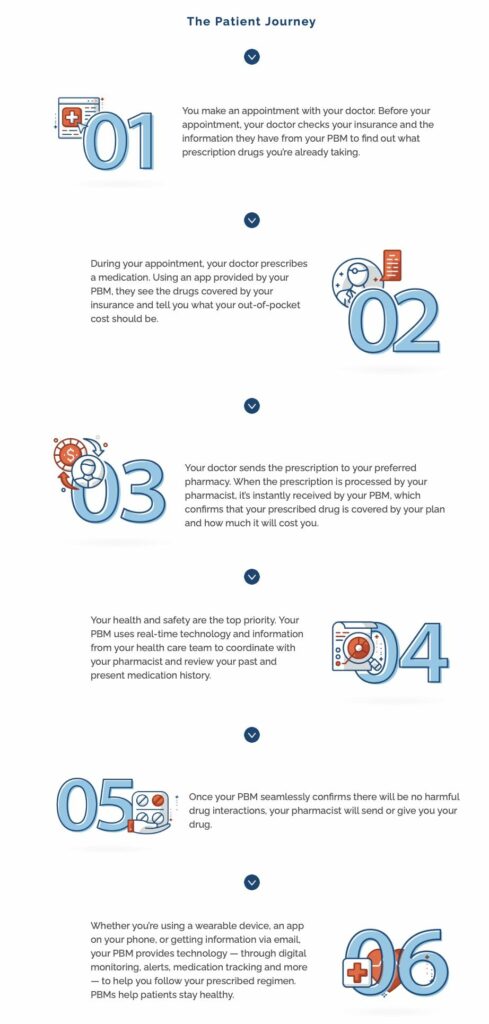
We recently saw a well-done explanation of how PBMs interact with the patient’s journey and wanted to share it with our readers.

The short article was created by Pharmaceutical Care Management Association (PCMA), the industry’s representative organization in Washington.

While most of us are deeply familiar with that journey, it’s easy to forget that, to healthcare consumers, that process may not be as clear as it could be.

In the article, the reader is walked through six discreet stages, from doctor’s visit through medicine dispensing and beyond. 

If you regularly come in contact with patients, some of whom may be struggling with who’s who in their healthcare process, you might want to bookmark this short article about what PBMs do for patients for sharing.

And for a deeper dive into how PBMs can do better, check out these articles from VativoRx:

Pharma Tariffs and Specialty Drug Cost Management: What Health Plans and TPAs Should Be Watching

On April 2nd, the White House signed a proclamation imposing new tariffs on patented pharmaceutical products under Section 232 of the Trade Expansion Act of 1962, the same national security trade authority underlying longstanding tariffs on steel and aluminum. The headline rate is 100%. But for health plans and TPAs managing specialty drug costs, that number requires context before it becomes useful for strategic rebate management and financial planning.

Read More »

When Drug Negotiation Reaches Part B

For years, Medicare drug price negotiation was mostly discussed as a Part D story. That changed in January, when CMS selected 15 drugs for the third cycle of negotiation, including the first drugs payable under Medicare Part B. Negotiations take place in 2026, and any negotiated prices from this cycle take effect in 2028.

Read More »